The people closest to the barrier often understand the solution best.
The future foundation intends to work with organisations that already serve communities, understand local needs and can help design responsible, practical programmes.



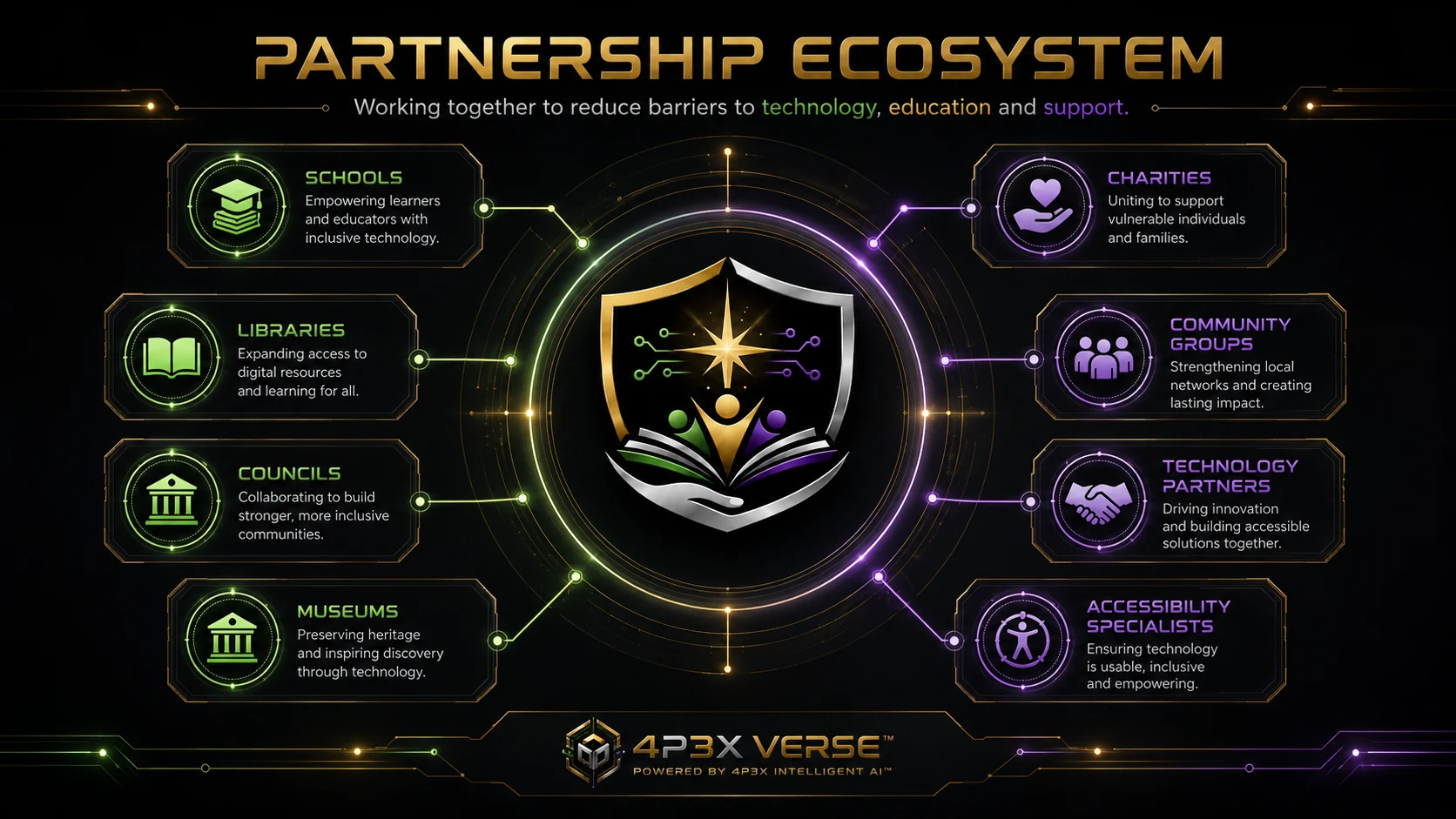
Schools and colleges
Identify access barriers, co-design learning support and test safe technology pathways.
Libraries and community hubs
Provide trusted local spaces for devices, digital confidence and understandable guidance.
Councils and public services
Improve signposting and reduce the gap between available support and real-world access.
Technology partners
Supply, refurbish, configure or support suitable devices and accessible tools.
Neurodiversity and disability groups
Provide lived-experience leadership, challenge assumptions and shape accessibility standards.
Charities and advisers
Create warm referral pathways and ensure people reach properly qualified help.
Funders and investors
Support evidence-led pilots, infrastructure, device access and sustainable delivery.
Researchers and evaluators
Help measure outcomes honestly and distinguish activity from genuine public benefit.
No organisation should have to solve the whole problem alone.
The foundation can become a bridge between technology, accessible explanation and services that already hold specialist knowledge.
What a good partnership should include
- A clearly defined public need
- Shared safeguarding and data responsibilities
- Realistic delivery capacity
- Accessible communication
- Measurable outcomes and honest limitations
- A route for feedback, complaints and correction
Register partnership interest
This form saves locally on this device in the demonstration build. It does not create a contract, funding commitment or approved partnership.